This article was translated automatically from Italian.
Milan Plans for the Future: Here's How Rents and Neighbourhoods Will Change!
Discover Milan's new Territorial Government Plan
on the environment, suburbs, social housing and controlled rents.
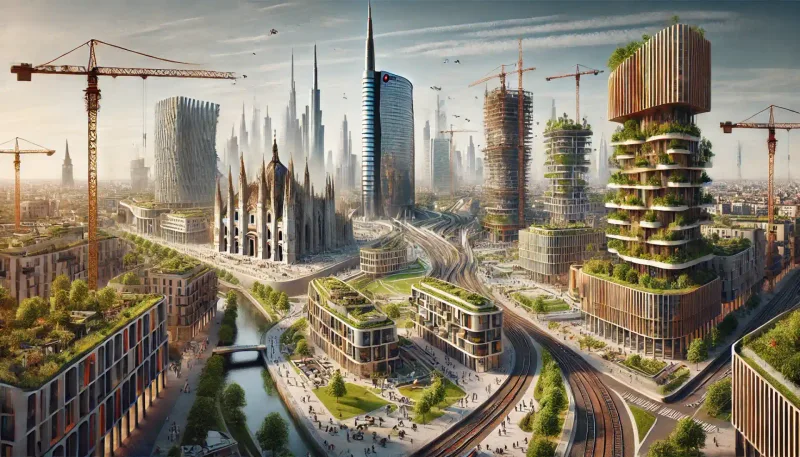
Each point outlined represents a strategic step towards an urban transformation that aspires to a balance of sustainability, fairness and beauty.
A clear and concise representation of the key objectives that aim to shape the future of the metropolis, guiding the city towards a horizon of liveability and responsible innovation.
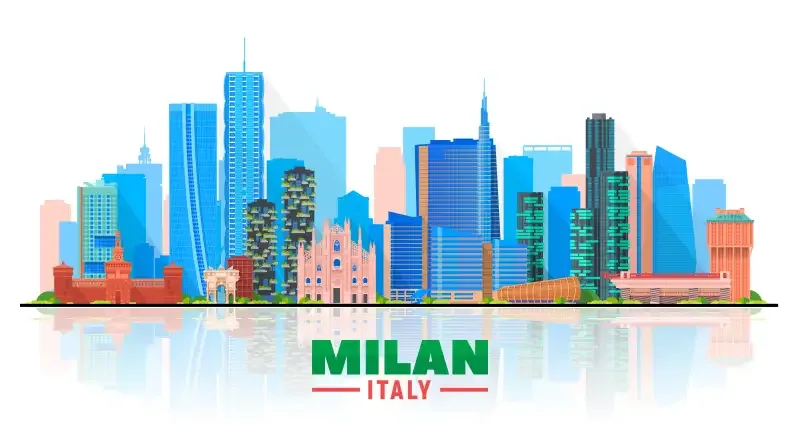
- 1. Milan, four cities: fair, beautiful, close and sustainable.
A vision of urban development based on four fundamental principles: fairness, beauty, accessibility and sustainability. In practice, every new improvement or construction project in Milan will have to promote these four values. If a project manages to do so, it will be rewarded with the possibility of building more than is normally permitted. The benchmark for how much can be built, called the building index, is set at 0.35 square metres of building for every square metre of land. Only projects that reflect the four pillars of the city will be able to exceed this limit. - 2. Affordable housing:
The aim is to increase the number of homes at affordable prices for young people, new families and people on low to middle incomes. Milan is thus committed to increasing the supply of reasonably priced homes, especially for young people, newly formed families and individuals on middle or lower-middle incomes. Currently, only property development projects exceeding 10,000 square metres are required to include social-rent housing. This threshold will be lowered, which means that smaller projects too will have to include low-cost homes, spreading social housing more widely across the city. The goal is to reach 20,000 new social apartments by 2035, in addition to the 8,000 already planned. Innovative forms of housing such as co-housing, low-cost homes and temporary accommodation will also be promoted, to meet diverse and changing housing needs. - 3. New gateways to the city:
The "New gateways to the city" refer to ten strategic areas of Milan, located at the main entry points to the city. These places are destined to become interchange hubs to make it easier to enter and leave the city: they are the areas around the stations of Molino Dorino, Bonola, Lampugnano, Comasina, Cascina Gobba, San Donato, Rogoredo, Famagosta, via Bisceglie and Roserio. The plan involves renewing them, making them not only more welcoming but also suitable for the creation of new homes. The urban regeneration project in these areas could lead to the construction of around 10,000 new homes and improve connections with neighbouring municipalities, making travel simpler and faster. - 4. Neighbourhood SuperAtlas:
- The "Neighbourhood SuperAtlas" is a project to improve public spaces in Milan, working at an intermediate scale between general urban planning and projects for individual buildings. The plan is to create a detailed atlas for each neighbourhood, drawing inspiration from the "Mosaico" pilot projects in San Siro and "Sistema NordOvest" in the Adriano/Crescenzago and Lambrate/Rubattino areas. This planning tool aims to provide an overall vision for renewing large urban areas, ensuring that public spaces are designed to be more connected and accessible. With the planned redevelopment of 830,000 square metres of public space, the intention is to make neighbourhoods more integrated and pleasant for residents. - 5. Greater protection of natural land:
- The plan provides for the introduction of stricter regulations to preserve natural land, ensuring that areas that could be built on are instead kept as green spaces. The specific objective is to preserve 1.5 million square metres of land, currently developable, as green areas, thus helping to increase natural spaces in the city. - 6. A healthier city:
- The aim is to make Milan a healthier city, stepping up measures to reduce polluting emissions to zero and adapt to climate change. This includes improving existing buildings to make them more environmentally friendly and developing strategies for mobility that favours sustainable, low-impact means of transport. - 7. More public space:
- The objective is to create more parks, squares and places open to everyone. When permission is given to build new buildings, developers will be asked to offer more space for the public. - 8. Urban quality and transparent rules:
- The intention is to improve urban quality by setting more precise and objective rules for the design of city spaces, such as courtyards, basements and tall buildings. It will be ensured that new constructions respect the character and identity of the various neighbourhoods, enhancing historic buildings and local architecture. - 9. Rebalancing development:
- Urban development will be managed in a balanced way, focusing efforts on growth that is not concentrated solely on the city centre but that also spreads building opportunities to less developed areas. The idea is to transfer building permits from already densely populated areas to sparser ones in order to promote a city as a whole made up of well-integrated, harmoniously developed neighbourhoods. - 10. Regenerating infrastructure:
- Milan's plan for infrastructure provides for turning asphalted areas into greener and more useful spaces, changing the use of viaducts and other existing structures, avoiding the construction of new major roads into the city, and improving existing depots and facilities to make them more efficient and less impactful.
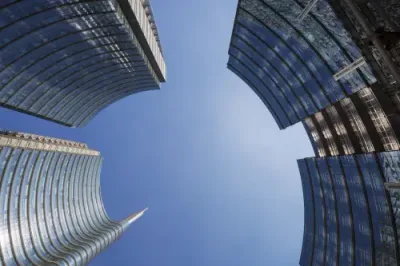
Ultimately,
the new Territorial Government Plan marks a turning point for Milan, placing it at the forefront of innovation and sustainability. This document concludes by providing an overview of the intentions and plans that will guide the metamorphosis of the city, charting the way towards a future of greater resilience to change, social inclusion and improved quality of urban life. With a well-articulated strategy and clear objectives, Milan is committed to overcoming the challenges of the present in order to build a tomorrow rich in opportunities and well-being for the community.
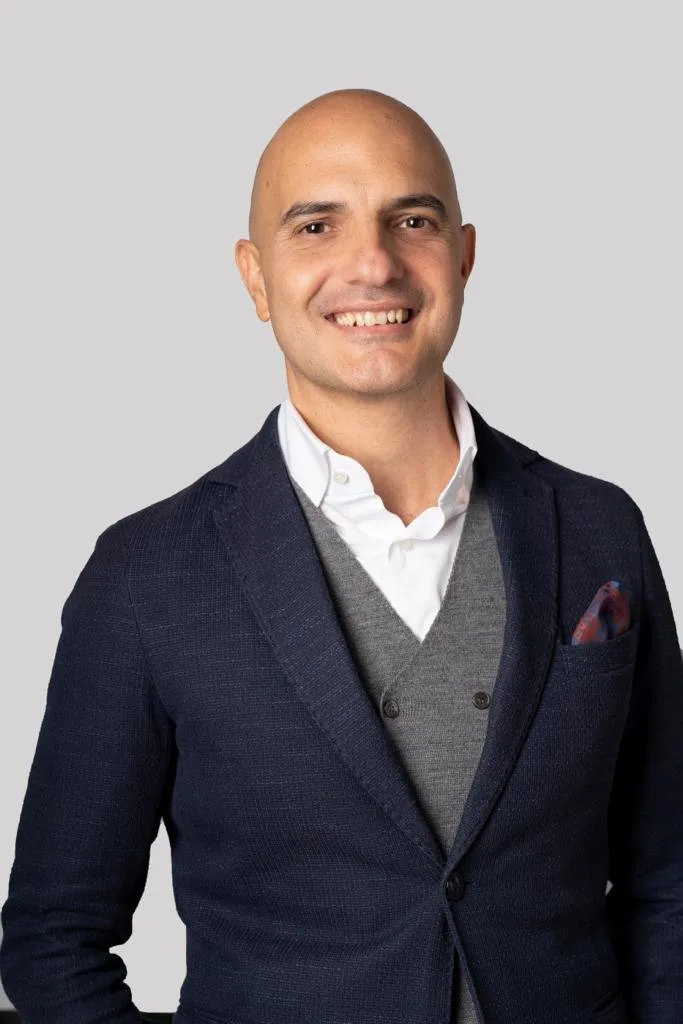
Alessandro Langella
Founder of Pavé, Milan
He knows Milan through years of hands-on market experience, properties visited and neighbourhoods watched as they changed.