This article was translated automatically from Italian.
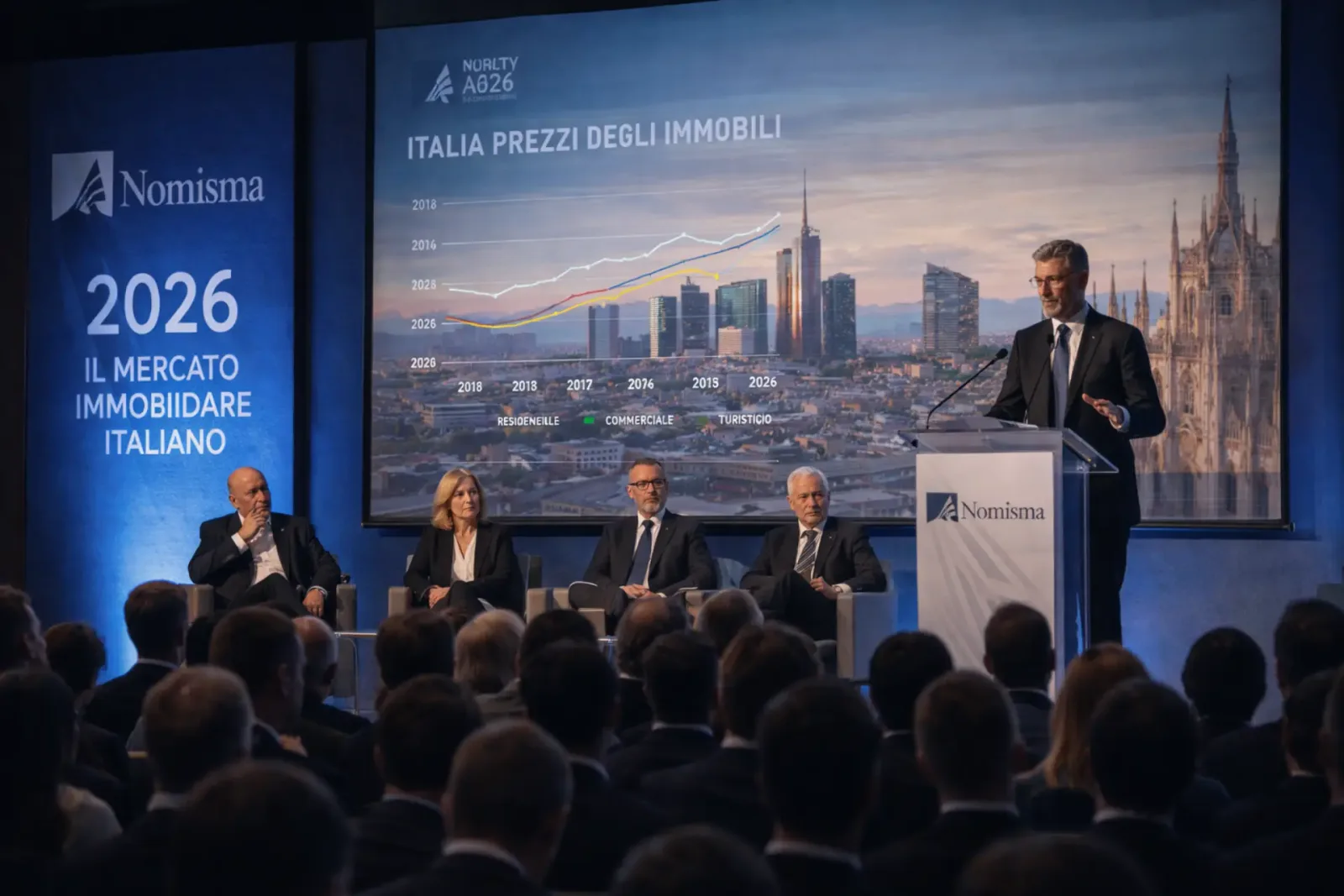
Nomisma Report 2026 - Homes, Cities and the Future: what the property market is really telling us
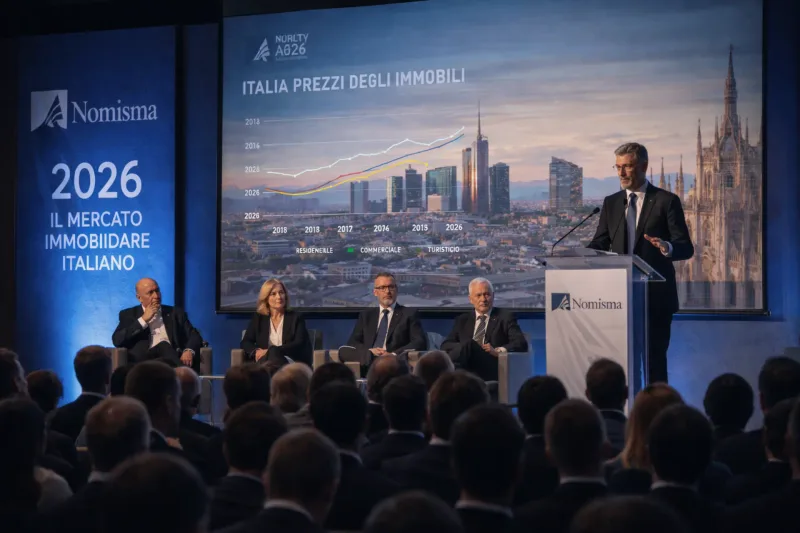
Nomisma Report 2026 - Homes, Cities and the Future: what the property market is really telling us:
In 2026 the Italian property market is not in crisis,
but nor is it expanding. It is in a subtler, less obvious phase, in which change shows itself not through striking numbers, but in the very way the market works.
To understand it, we need to start from an increasingly widespread perception: buying a property is harder, renting is more expensive, and the differences between cities are becoming ever more marked. It is not just a feeling, it is exactly what is happening.

Italy: a slower market, but above all a more selective one
Nationally, the market has stabilised after the upheavals of recent years. Sales are not collapsing, but nor are they growing significantly. Prices are holding, without however recording across-the-board increases. The system appears to be in a phase of settling.
The real change, however, runs deeper: today not all properties are valued in the same way.
Factors that were once secondary have become central. Energy efficiency, for example, has a direct impact on value. A renovated property, well connected and set in a dynamic context continues to find demand. By contrast, an inefficient property or one located in less attractive areas can remain on the market for a long time.
An ever clearer divide is opening up:
- on one side, dynamic urban areas, where the market remains solid
- on the other, suburbs and small towns, where demand is weakening
There is no longer a single Italian property market, but a multiplicity of markets with different speeds and logics.
The role of mortgages: the great invisible filter
One of the key elements of this new selectivity is the cost of money.
In past years, access to credit was made easier by very low rates. Today, although stabilised, they remain at higher levels than in the period before 2022.
The effect is concrete: the pool of people who can afford to buy a property is shrinking.
The market does not grind to a halt, but its composition changes. Purchases backed by own capital are increasing, while those more exposed to credit are decreasing. The result is a slower market, but also a more rigid and selective one.
Rents: the real silent emergency
If there is one area where the change is evident, it is that of rentals.
In recent years a structural combination has emerged: more demand and less supply. The result is constant pressure on prices.
The causes are many. Short-term lets have reduced traditional supply, while those who cannot manage to buy stay longer in the rental market.
In cities the phenomenon is now plain to see: finding a property to rent is complicated, keeping it is increasingly costly.
Milan: the future already here
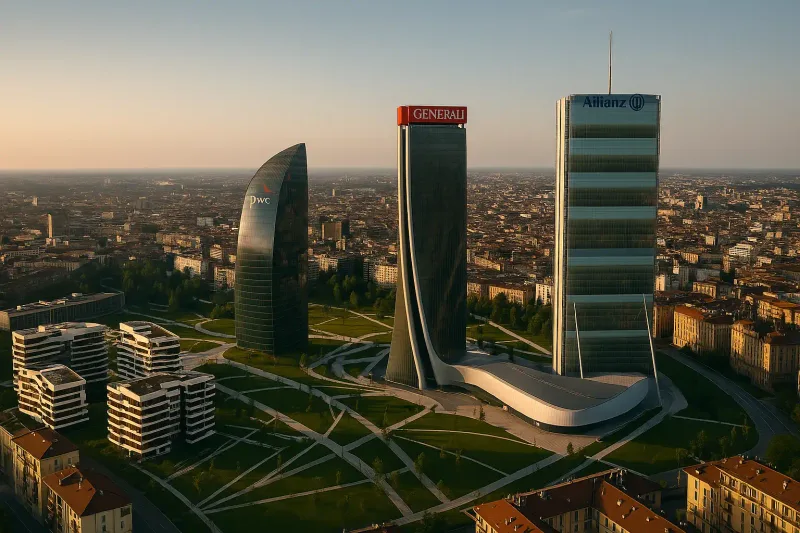
In this context, Milan is not simply a special case, but a preview of dynamics that could spread to other areas.
The city continues to attract investment, students and skilled workers. It is increasingly integrated into international circuits, and this is reflected directly in the property market.
Demand is no longer just local, but global. And when global demand meets limited supply, constant pressure on prices is generated.
Milan today is a dynamic and attractive city, but for that very reason increasingly selective.
The Milan knot: between success and accessibility
The central issue is not the rise in prices in itself, but its consequences.
In Milan a complex balance is taking shape. On one hand, the city continues to generate opportunities and attract capital. On the other, it is becoming harder for middle incomes to access sustainable housing solutions.
This is particularly evident in the rental market, but it also affects life choices:
- moves towards outlying areas are growing
- commuting is increasing
- forms of shared living are spreading
The city's social structure is changing, becoming more international but also more selective.
The impact of geopolitics: a market that is less and less local
A distinctive feature of 2026 is that the Italian property market is no longer isolated.
The geopolitical tensions of recent years also have effects on the property market. Not directly and immediately, but through several channels:
- interest rates influence access to credit
- energy costs affect construction and renovation
- international investors are adopting more selective criteria
Milan is particularly exposed to these dynamics, but the rest of the country is also feeling them more and more.
The outlook: towards a more mature market
Looking ahead, there are no signs of imminent shocks, but rather a continuation of current trends.
In Italy, overall stability is likely, with modest growth concentrated in the most dynamic areas. The difference will increasingly be determined by the quality of properties and their location.
Milan, on the other hand, seems set to continue along its path:
- moderate price growth
- sustained demand, including international
- persistent pressure on rents
With a structural transformation under way: the market is moving closer to European models, characterised by a greater presence of institutional operators and an expansion of the supply intended for rental.

In short, the Nomisma report
The property market of 2026 is no longer what it was a few years ago.
It is less uniform, more selective and increasingly influenced by global factors. In this context, location, quality and context become decisive.
Milan represents the most advanced version of this evolution, while the rest of Italy follows it at different speeds.
Understanding this transformation is essential, because property is not only an investment. It is the point of intersection between economy, society and everyday life.

Alessandro Langella
Founder of Pavé, Milan
He knows Milan through years of hands-on market experience, properties visited and neighbourhoods watched as they changed.