
This article was translated automatically from Italian.
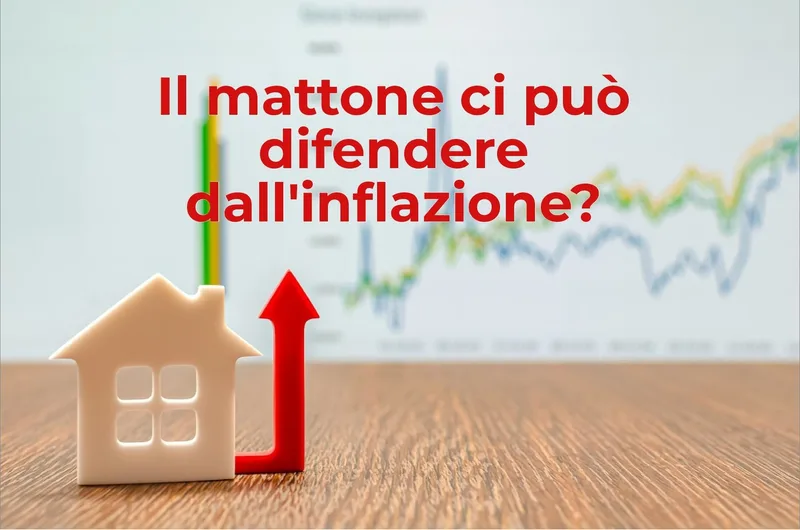
Inflation and the property market.
With inflation and interest rates about to change, property investment increasingly seems to take on the features of a safe haven, even though those looking for an alternative to shares and bonds may still find themselves managing some risk. Experts point to a Bloomberg study that seeks to bring clarity to the global property landscape, explaining why buying homes as an investment can be a good choice for investors.
Investing in property: a safe haven?
With inflation at its highest in almost 40 years and at least three rate rises, the hunt for safe havens has begun. The property sector is considered an approach for protecting against inflation, given that the asset class usually has little correlation with shares and bonds. So, naturally, investor interest is sky-high, even against the backdrop of a super-hot property market, a low supply of homes and mortgage rates that threaten to rise. Nikodem Szumilo, associate professor of economics at University College London and a specialist in urban economics and finance, said that over the past six months he has received questions on this subject at least twice a week.

"Inflation is quite high and the rise in rates will not help immediately"
So people are considering what they want to do with their savings”. Some experts say that buying property now, despite a hot and competitive market, is a good bet, given that mortgage rates are still low. Others say that, because property is so localised, rural areas may not offer the same prospects as big cities. But in reality, this depends on the circumstances and the investment time horizon of each individual.
Below are some questions asked by investors, both professional and amateur, followed by the experts' assessments.
Is there a correlation between inflation and property?
At first glance, property and inflation do not seem to be related. Inflation is based on consumer prices, whereas housing is based on demographic trends, construction and overall supply. However, in the long term, inflation and housing tend to move in the same direction because of wages and interest rates. Inflation often pushes wages up, which in turn increases budgets for renting and buying. Inflation also often appears in low interest rate environments, such as the United States and now also some parts of Europe, where the cost of borrowing is low. This also increases demand for property. With inflation reaching levels not seen for years, property is an extremely attractive investment option. Property is an alternative to the stock market. People invest in it for the same reason they invest in cryptocurrencies. They are worried about the current economic system and are looking for options.
Could inflation have an effect if you are trying to sell a home?
At the moment inflation puts the housing market in the hands of sellers. As the number of homes available is shrinking, this pushes prices up. While the price of everything else rises, the recent increase in housing costs does not seem so bad by comparison. So, in the short term, demand for property purchases may well remain strong despite inflation. The rising cost of building materials, due to inflation and ongoing supply chain problems, could push house prices up further this year as homebuilders pass them on to consumers. For example, timber prices are at their highest in months. Supply shortages do not help either. Another risk posed by inflation is that, with the prices of other goods, such as food and gas, going up, potential homebuyers may find themselves with less spare money to invest in property. However, consumers are expected to cut back on more discretionary spending such as travel, clothing and entertainment, leaving more room for necessities such as housing.
Is now a good time to buy a home?
Whether it is a good time to buy a home depends on individual circumstances. Although owning a home can protect you from annual rent increases, property prices have in fact risen a great deal globally. For those who are interested in staying in a home for more than five years, buying makes sense; but if you think you will have to sell before then, it may be better to wait. Prices could in fact fall in the coming years, undermining the investment. However, if the move is driven by necessity, the time is right. Mortgage rates, although slowly rising, are still historically low. This is an advantage for those buying a home now. The best moment may have passed, but rates are certainly still very low compared with inflation. Anyone who remortgages now will lock in a rate that is still incredibly attractive. Those with variable-rate mortgages, and who therefore have interest rates that can fluctuate, should today look at a fixed-rate mortgage, to make better use of the current moment.

Is it worth investing in commercial property?
According to economists, appreciation in commercial property has generally been more timid than that of homes, at times even failing to match long-term inflation rates. Leases in office buildings tend to be longer than in housing, which means rents take longer to adjust to inflation, which can be a disadvantage for a property investor. During the pandemic, the increase in remote working and online shopping reduced demand for retail and office space. In the past, people invested in real assets because they could not find value in financial assets. There was a feeling that shares were so expensive compared with historical values that they looked for other sources of income and moved into real assets. That may not be the case right now. Multifamily homes are another story. Because leases typically expire every 12 months, landlords have more opportunities to build factors such as rising utility costs into the rent.

Alessandro Langella
Founder of Pavé, Milan
He knows Milan through years of hands-on market experience, properties visited and neighbourhoods watched as they changed.