This article was translated automatically from Italian.
The evolution of the Italian property market in the economic context of 2024

Towards New Horizons:
How 2024 Is Shaping the Future of Property in Italy
With a Focus on Property in the Streets of Milan
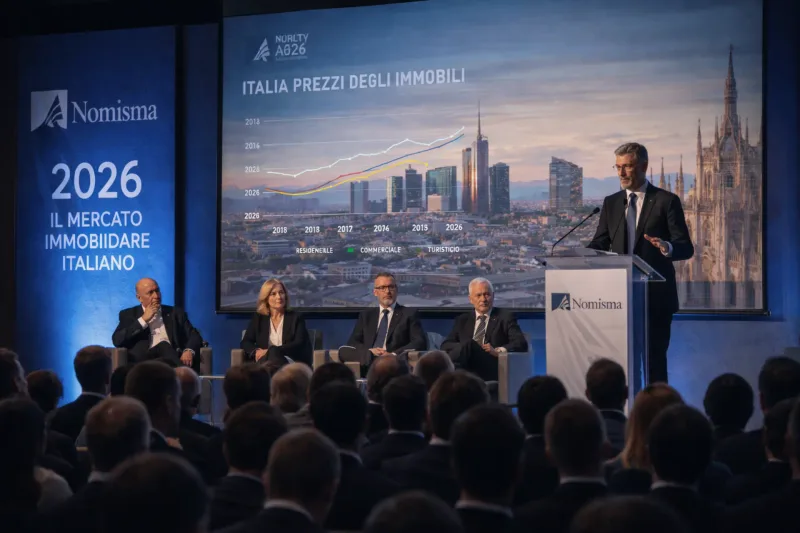
The Italian property market is going through a moment of significant transformation, showing a phase of weakening that brings an end to the buying frenzy that emerged in the post-pandemic period. The latter, characterised by intense demand driven by the need to adapt homes to new requirements, has given way to a less favourable context, in which changes in economic conditions have begun to weigh on buyers' interest.
The key to a possible recovery of the sector lies in credit dynamics. Indeed, easing inflation, a more expansionary monetary policy and a banking strategy focused on supporting private debt through the granting of mortgages could signal a reversal of the trend. However, at the moment, only uncertain signs of this change can be seen, with the property market continuing to show signs of weakness.

The traditional rigidity of property values in Italy, typical of phases of cyclical reversal, helps to keep sellers' expectations high relative to actual purchasing power, further slowing down transactions. The fall in sales in 2023, largely attributable to the reduction in demand financed by mortgages, highlights this dynamic. At the same time, a slight increase in prices, especially in medium-sized cities, has the twofold effect of nominally preserving the value of properties and increasing the illiquidity of the market.
A change of course by the European Central Bank, while necessary, will not be enough to revitalise the market immediately. A phase of normalisation that can restore more favourable conditions for buyers will be essential.
At the same time, there is growing interest in the rental market, driven both by the search for higher returns from short-term options and by reluctance to sell owned properties. The limited availability of housing on the rental market, combined with concern about possible defaults, has led to a rise in rents, further aggravated by a general shortage of supply relative to demand.
Despite the uncertainties, signs of greater concreteness can be seen among institutional investors, who have begun to reassess the residential sector, traditionally given less consideration than other asset classes. The expansion of interest in new types of investment, also stimulated by the needs that emerged during the pandemic, could introduce new elements into a market that suffers from a historical concentration in both type and territory.
The Italian property market therefore faces numerous challenges in 2024, with the stance of financial institutions playing a crucial role. An environment more favourable to the granting of credit could avoid negative impacts on prices due to the decrease in demand and transactions, outlining a future of possible recovery for the sector.

Milan:
a benchmark in the Italian property market
In the context of the Italian property market, Milan represents a particularly interesting case study, as it shows unique dynamics that reflect both general challenges and local specificities. The city, the economic and financial hub of the country, stands out for a resilience and dynamism that significantly influence trends in the sector.
- 1. Resilience of Property Values
In Milan, the resilience of property values has been evident even in times of general market contraction. The city has shown a remarkable ability to keep property prices high, supported by constant demand for both purchase and rental. This phenomenon is attributable to Milan's strong appeal as a centre of business, fashion and culture, which continues to attract international investment and interest from high-end buyers. - 2. Innovation and Development
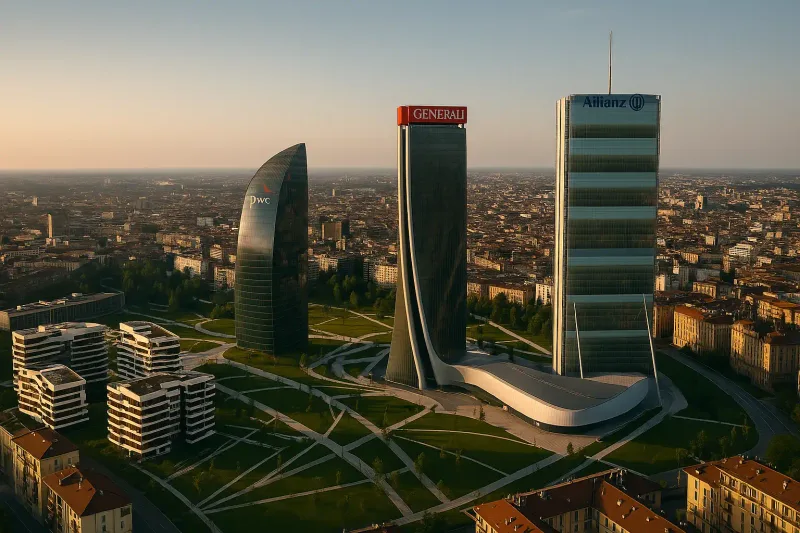
Milan has also distinguished itself through its openness to innovation and to the development of new property projects. The city has seen the birth of numerous urban regeneration initiatives, aimed at transforming disused industrial areas into vibrant residential, commercial and office districts. These projects not only meet the need for new homes but also help to revive areas of the city that were previously neglected, generating a positive impact on Milan's overall appeal. - 3. Growing Rental Market
The rental market in Milan has recorded sustained growth, fuelled both by demand for temporary accommodation and by that of students and professionals attracted by the opportunities the city offers. This has led to an increase in rents, especially in central and well-served areas, reflecting the relative scarcity of offers compared with demand. However, the pressure on the rental market raises questions about housing affordability, especially for young people and families on low to middle incomes.

Each of these
elements could be a springboard for your success in the property market.
In the 2024 landscape,
Milan is confirmed as a market of particular interest for investors and buyers able to navigate the challenges posed by the economic and financial situation. The city remains a benchmark for observing the evolution of the Italian property market, offering insights into how resilience, innovation and development can help shape the future of the sector in a dynamic and constantly transforming urban context.

Alessandro Langella
Founder of Pavé, Milan
He knows Milan through years of hands-on market experience, properties visited and neighbourhoods watched as they changed.