This article was translated automatically from Italian.
Building Revolution with the Salva Casa Decree
Building Revolution with the Salva Casa Decree
Aims and Measures of the Decree to Support the Property Market
Decree-Law no. 69 of 29 May 2024, known as the “Salva Casa Decree”, has recently been published in the Gazzetta Ufficiale and came into force on 30 May 2024. The decree introduced urgent provisions on the simplification of building and urban planning rules, with the aim of regularising minor irregularities in Italian homes and making it easier to buy and sell houses at a time of growing housing demand. Here are the main points of the Salva Casa Decree in detail.
- Aim of the Decree
The main aim of the Salva Casa Decree is to promote the building recovery of apartments whose sale is hindered by existing regulations, thereby making the property market easier to navigate. The decree focuses on minor building irregularities and does not amount to a building amnesty. The main cases addressed include:
- Formal irregularities arising from uncertainty in the interpretation of the current rules: These irregularities occur when building rules are ambiguous or open to multiple interpretations, causing uncertainty about how to demonstrate the legal compliance of a property. For example, there may be discrepancies over which rules apply or how to properly document existing building permits.
- Building irregularities resulting from works carried out without formal authorisation by previous owners: These irregularities refer to alterations or building works carried out by a property’s previous owners without obtaining the necessary legal authorisations. This may include building extensions or altering existing structures without official permits, which complicates the sale or regularisation of the property.
- Partial irregularities that could be regularised at the time of construction, but can no longer be because of the “double compliance” requirement: This situation arises when, at the time a building work was carried out, it was possible to obtain a retrospective permit for the irregularities present. However, with the passing of time and changes to the rules, such irregularities can no longer be regularised because they no longer meet the compliance requirements both at the time of construction and at the time the application is submitted.
- Free Building Works
The decree widens the categories of works treated as free building works, including:
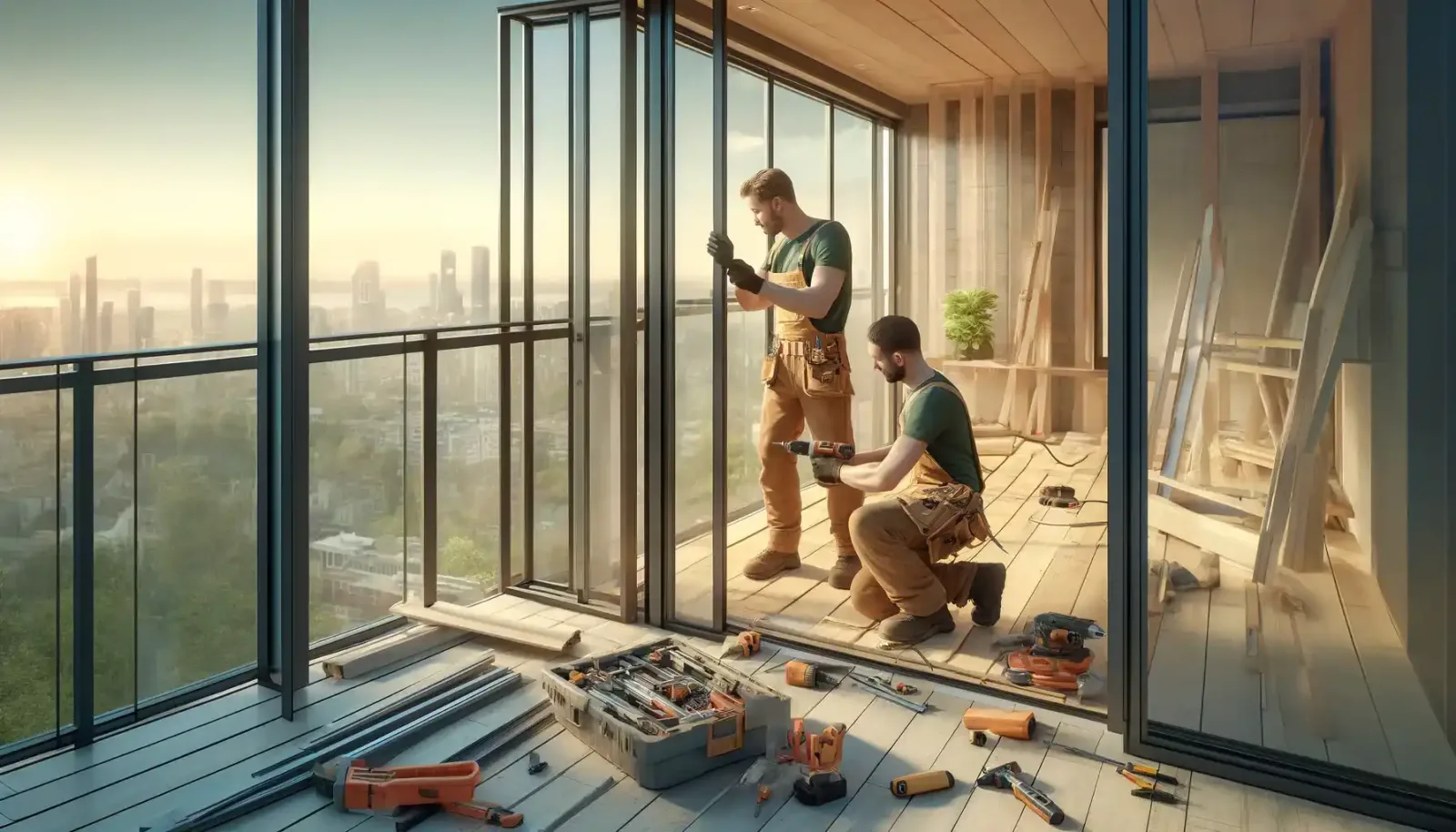
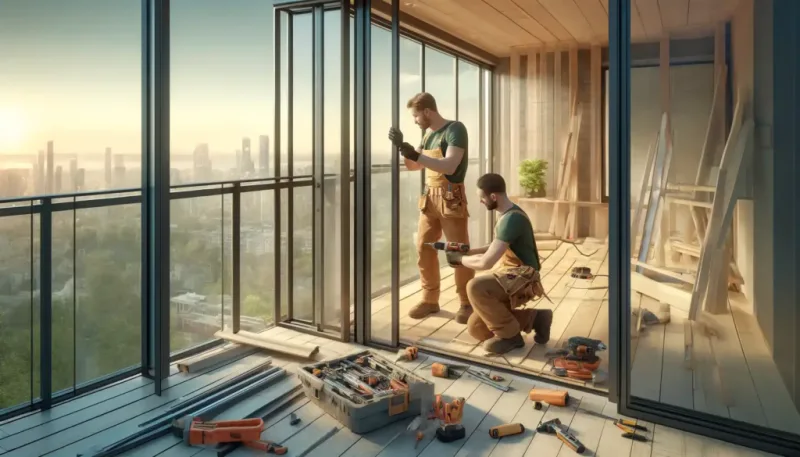
- Removable panoramic glazing (VePA), including for porticoes inside the building: These structures can be installed without specific permits, provided that they are easily removable and do not create new permanent living spaces.
- Protection from the sun and the weather, such as pergola awnings, provided that they do not create permanently enclosed spaces and do not have a visually discordant impact: Structures such as pergola awnings can be added to buildings without authorisation, as long as they do not permanently enclose spaces and do not significantly alter the aesthetic appearance of the building.
- Construction Tolerances
The decree introduces construction tolerances for works carried out by 24 May 2024. These tolerances vary according to the floor area of the property unit:
- 2% for areas over 500 square metres.
- 3% for areas between 300 and 500 square metres.
- 4% for areas between 100 and 300 square metres.
- 5% for areas under 100 square metres.
- Execution Tolerances
The decree treats the following as execution tolerances for works carried out by 24 May 2024, including:
- Geometric irregularities: Small discrepancies between the planned dimensions and those actually built.
- Minor changes to building finishes: Changes of minor importance to the external or internal finishes of buildings.
- Different positioning of installations and internal works: Changes in the location of technical installations and internal works without affecting the load-bearing structure of the building.
- Smaller dimensions of the building: Construction of the building with dimensions slightly smaller than those authorised.
- Failure to build non-structural architectural elements: Decorative or functional non-structural elements that were not built.
- Execution irregularities in external and internal walls: Differences in the position or execution of walls compared with the original project.
- Different location of internal openings: Differences in the position of doors, windows and other internal openings compared with the approved project.
- Certification of Compliance
The decree simplifies the process of certification of compliance, requiring “double compliance” only in the most serious cases. Previously, this had to be demonstrated for any work, showing compliance with the rules both at the time of construction and at the time the application was submitted.
- Timescales and Tacit Approval
The decree introduces the principle of tacit approval, overcoming the previous “silence means refusal” rule. This means that if the administration does not reply within the set deadlines, the application is automatically accepted. The specific timescales are:
- 45 days for the retrospective permit.
- 30 days for the Certified Notification of Commencement of Works (SCIA).
- Up to 180 days for properties subject to landscape protection restrictions.
- Legitimate Status of the Property
The decree reduces the administrative burden on citizens, making it possible to demonstrate the legitimate status of the property by presenting the title that governed the last building work, even if retrospective. This makes it easier to regularise partial irregularities by helping to demonstrate the legitimacy of the property.
- Change of Intended Use
The decree simplifies the change of intended use of property units. Within the same functional category, a change is always permitted. Between different functional categories, the change is limited to the residential, tourist accommodation, productive, administrative and commercial categories, within specific areas such as the historic centre, established residential areas and expanding residential areas. Property units on the first floor above ground are excluded from the simplifications.
- The Situation in Milan
The Salva Casa Decree does not include the “Salva-Milano” provision, intended to unblock certain building renovations in Milan that are under investigation by the public prosecutor’s office. These investigations have created a standstill on the city’s building sites, with the Municipality requesting a specific provision to resolve the situation. Initially, it was thought that this provision was included in the decree, but it was subsequently removed. The Minister of Infrastructure Matteo Salvini announced that he will work on amendments to include it, seeking a bipartisan approach to resolve the problem without interfering with the ongoing judicial investigations.
- Economic Impact
The building standstill in Milan has significant economic repercussions. The Osservatorio sull’abitare forecasts a freeze on investments of 38 billion euros, while the Municipality is struggling to find officials willing to sign off building projects for fear of future investigations. This has blocked major urban regeneration projects, such as the redevelopment of piazzale Loreto, with estimated losses of around 150 million euros in urbanisation charges.


Each of these
elements could be a springboard for your success in the property market.
Conclusions
The Decreto Salva Casa represents a significant step towards simplifying building and planning procedures in Italy. By focusing on minor building irregularities, the decree aims to unlock the property market and respond to the growing demand for housing, introducing innovative measures such as silence-consent and making minor building works easier. However, the situation in Milan highlights the challenges and complexities that can arise in implementing such regulations at local level.

Alessandro Langella
Founder of Pavé, Milan
He knows Milan through years of hands-on market experience, properties visited and neighbourhoods watched as they changed.