This article was translated automatically from Italian.
HOW PROPERTY APPURTENANCES WORK
It is not uncommon to hear about the appurtenance of a property for tax and cadastral purposes. But what are appurtenances? What are their main characteristics?
Appurtenance is a concept clearly defined by Art. 817 of the Civil Code, which describes it as a thing whose purpose is to serve or to durably adorn another thing, which is defined as the main one. In the property and cadastral sphere, therefore, the term appurtenance refers to all those ancillary assets of the main home, such as a garage, a cellar, etc.
To be defined as such, an appurtenance
Must have two fundamental characteristics, which are durability and the owner's intention.
Durability of the designation means that the service relationship with the main asset must not be occasional in nature, but must be prolonged over time.
The owner's intention, on the other hand, refers to the need for the owner of the main property to establish the appurtenance bond between the main thing and the accessory, that is, to establish that the two things are functional to each other.
The appurtenance and the main property do not need to be physically and structurally connected; they can also be located at a distance, since the link is exclusively economic and functional.
Let us take an example: a garage located in a building other than the main building is considered an appurtenance and, as such, must be registered with the cadastre if the owner indicates it as functional to the main home.
From an urban planning point of view, therefore, appurtenances are all the accessory properties for which the owner has established a durable appurtenance bond with the main home, to which the appurtenances are functional. The appurtenance of a main home, in conclusion, is a structure without its own independent purpose, whose function is exhausted in its relationship with the main building. This definition of appurtenance and the cadastral meaning of the term, therefore, coincide.
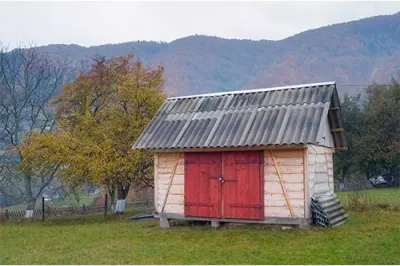
All the cadastral categories of appurtenances
We have clarified what the appurtenances of a property are. Let us now look at the details: what the appurtenances of a property are and how to identify them for the purposes of cadastral registration. From the cadastral point of view, appurtenances can be divided into three cadastral categories:
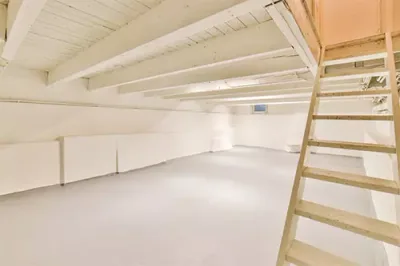
Category C/2 (cellars, attics, lofts, storerooms, warehouses)
Category C/6 (garages, parking spaces, vehicle sheds, stables, stalls)
Category C/7 (closed or open basements)
The appurtenances of a main home must be properly registered with the cadastre, as they form an integral part of the main property and, as such, must be entered in the property registers under the relevant cadastral category. The term cadastral registration refers to a specific cadastral procedure aimed at changing the cadastral data of an existing building or at registering a new building or one that has never been declared.
The cadastral registration of an appurtenance is an act not to be underestimated, since appurtenances are fully included in any property sale and purchase transactions, except where expressly provided otherwise, and also have tax consequences.
For tax purposes, in fact, appurtenances will contribute to an increase in the cadastral income, with the exception of one appurtenant unit for each cadastral category, which will be able to enjoy the tax benefits provided by law for the main home. All the other appurtenances will be added to the calculation of property taxes.
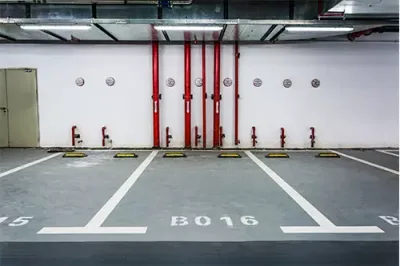
How to register appurtenances with the cadastre
In 2016 there was a reform of the matter (still in force) which in effect changed the procedures for the cadastral registration of the ancillary assets of properties, both for those already existing and for newly built buildings, and established the cadastral categories of appurtenances.
The changes mainly concern appurtenances falling within cadastral category C/2, that is, cellars, lofts, warehouses and storerooms with independent access from the main asset, which the reform provides are to be excluded from the main cadastral floor plan.
In the case of the aforesaid appurtenances, in fact, it will be necessary to create a different subalterno and then register them in the category they belong to, that is, C/2.
A change that mainly affects the economic side, since the creation of a new subalterno contributes to an increase in the value of the overall cadastral income.
The task of proceeding with the cadastral registration of appurtenances naturally falls to the owner of the property to which they are connected, and to the construction company in the case of newly built apartment buildings.
How much does it cost to register the appurtenances of a property with the cadastre?
Let us now come to the costs. As we have mentioned, the reform of the cadastral registration of a property's appurtenances has led to an increase in the cadastral income of properties and in the total registration costs, as a new subalterno has to be created for each C/2 appurtenance. The registration of appurtenances must be requested at the Catasto office with jurisdiction over the area and costs 50 euros (in cadastral fees) for each independent appurtenance to be registered. Usually the registration procedures for a property and its appurtenances must be drawn up by a qualified technician, who will take care of the whole procedure of filing the declaration with the Catasto and who will of course have to be paid a fee.
Alternatively, it is possible to make use of the service and the professional expertise offered by Pavè Immobiliare, which takes care of the entire procedure on behalf of the client, without the client having to do anything other than request the service.

Alessandro Langella
Founder of Pavé, Milan
He knows Milan through years of hands-on market experience, properties visited and neighbourhoods watched as they changed.