This article was translated automatically from Italian.
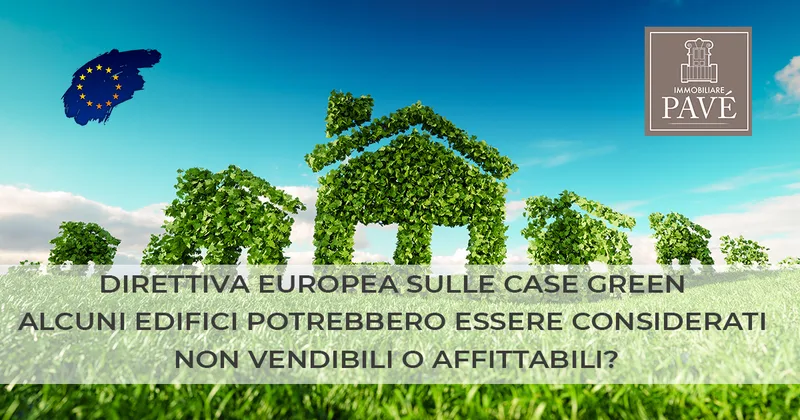
The European Parliament approves the Green Homes Directive
The aim of the Green Homes Directive is to increase the energy efficiency of buildings across Europe by 2050. Could some buildings be considered unsellable or unlettable?
The European Parliament has approved the directive on the energy efficiency of green homes with 343 votes in favour, 216 against and 78 abstentions. However, the measure is not about to come into force, as adoption by the Member States is unlikely to take place before 2025.
The directive covers both public and private buildings and aims to renovate the entire European building stock to make it more sustainable. By 2030, all residential buildings will have to fall within energy class E, moving to class D by 2033, with the aim of reaching zero emissions by 2050. New buildings will have to be zero-emission from 2028, while for those owned or managed by public bodies the deadline is set at 2026.
WHO IS EXEMPT?
Each country may exempt up to 22% of its total building stock, and some categories of buildings are excluded from the measure.
These include monuments, holiday homes, protected historic buildings, churches and other places of worship, and detached homes with a floor area of less than 50 square metres.
To take account of the different situations among the 27 Member States, energy class G will have to correspond to the 15% of buildings with the worst energy performance in each country.
In Italy, by 2033 all residential buildings will have to fall within energy class D, but it is important to note that the current classification could change as a result of the European directive.
A SINGLE ENERGY CLASS TABLE FOR ALL EU COUNTRIES
At present, energy classes vary between countries, and the Italian situation could be reshaped following the directive.
Moreover, despite the common perception, Italy is not among the countries most affected by the directive in terms of property ownership and the age of homes, and is below the average compared with other European countries.
WHAT COULD AFFECT THE VALUE OF PROPERTIES
The directive could affect the value of properties in the event of a sale or a new lease, causing a fall in value or an uncompetitive increase.
Energy-efficiency upgrades of buildings could put banks under pressure in a period of high inflation and rising costs of building materials. The risk of speculation on the market remains high.
PENALTIES
Another critical aspect concerns the possible penalties for non-compliant buildings, which will be the responsibility of individual states.
From 2030, these buildings could be considered unsellable or unlettable, although this possibility has not yet been officially confirmed.
IN SUMMARY: SHOULD WE BE WORRIED?
- The directive is not yet in force and could be amended further. There is no need to worry, because the situation could change before it comes into force.
- The directive sets general objectives, but leaves the Member States free to decide how to achieve them. This means that each country can adapt the measures to its own specific features and circumstances.
- There is no general obligation to renovate. When carrying out building work, certain energy-efficiency parameters must be met, but this process is already under way.
- There is no ban on selling properties with low energy efficiency. Although more efficient properties will have a higher value on the market, it is not forbidden to buy a less efficient property and renovate it later.
- The directive provides for exceptions for certain types of property, such as historic monuments, buildings located in historic centres, holiday homes, places of worship and single-family homes of less than 50 square metres.
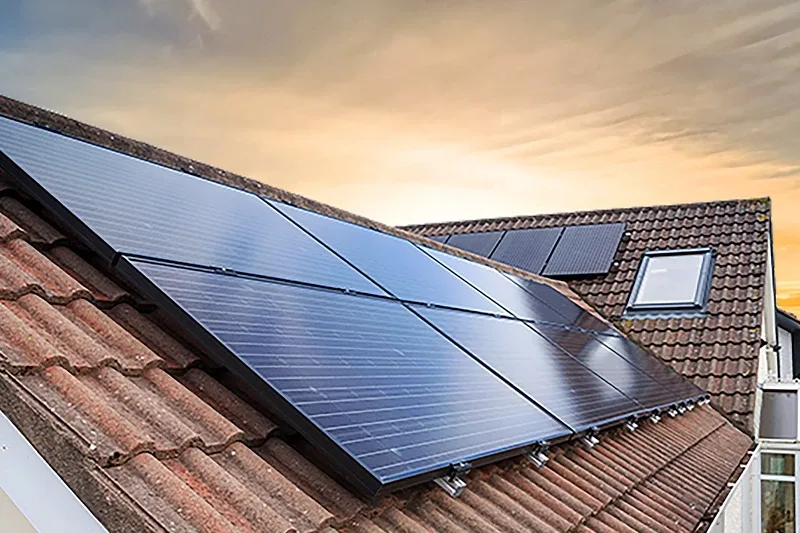
- The obligation to use photovoltaics applies only to new constructions and major renovations, and Italy is already in line with this requirement thanks to current legislation.
- The gradual phasing out of gas heating systems does not mean that the boiler has to be replaced immediately. It applies only if the boiler breaks down or a renovation is carried out, and the use of alternative systems such as heat pumps or hybrid systems is envisaged.


Alessandro Langella
Founder of Pavé, Milan
He knows Milan through years of hands-on market experience, properties visited and neighbourhoods watched as they changed.